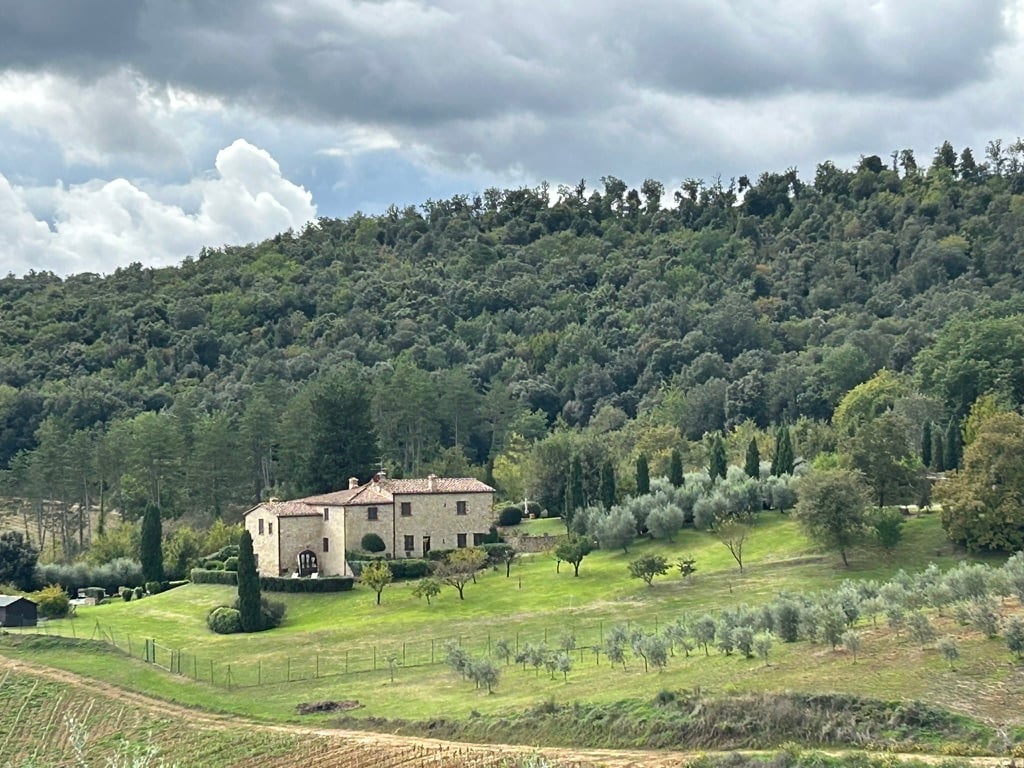
A journey through time, from ancient stones to modern hospitality
A Discovery on the Strada Vecchia
In 1999, Giampiero and Lucia made a discovery that would change their lives. Two kilometres south of the medieval towers of San Gimignano, along the historic Strada Vecchia—the old road that has wound through these Tuscan hills for centuries—they found an old farmhouse.
Or rather, what remained of one.
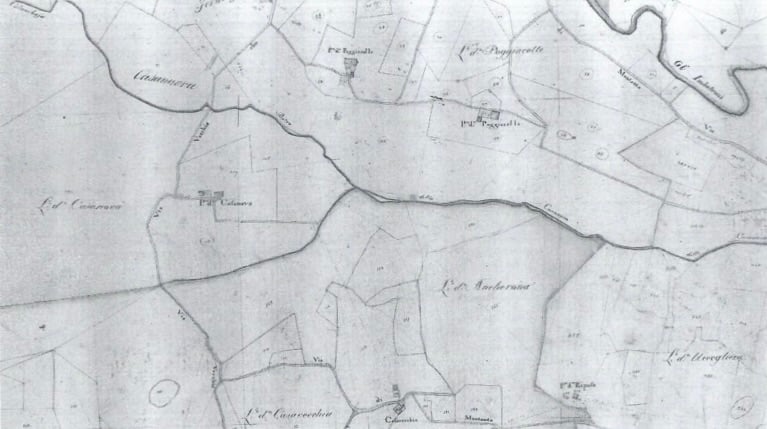
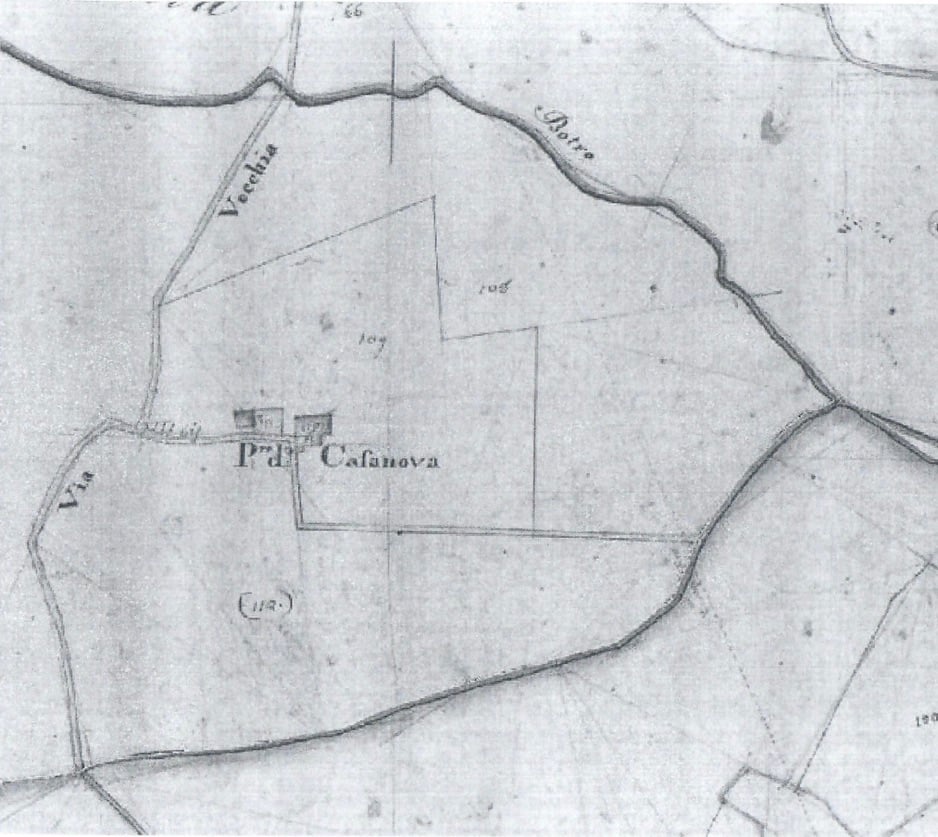
The property, known as Podere Casanuova, was already recorded in the Leopoldino land registry of 1835. For generations, it had been the hub of peasant life in this corner of Tuscany—a working farm where families lived close to the land, tending olive groves and vineyards, raising animals, and marking the seasons by harvest and planting.
But by 1999, time had not been kind.
A Ruin with Potential
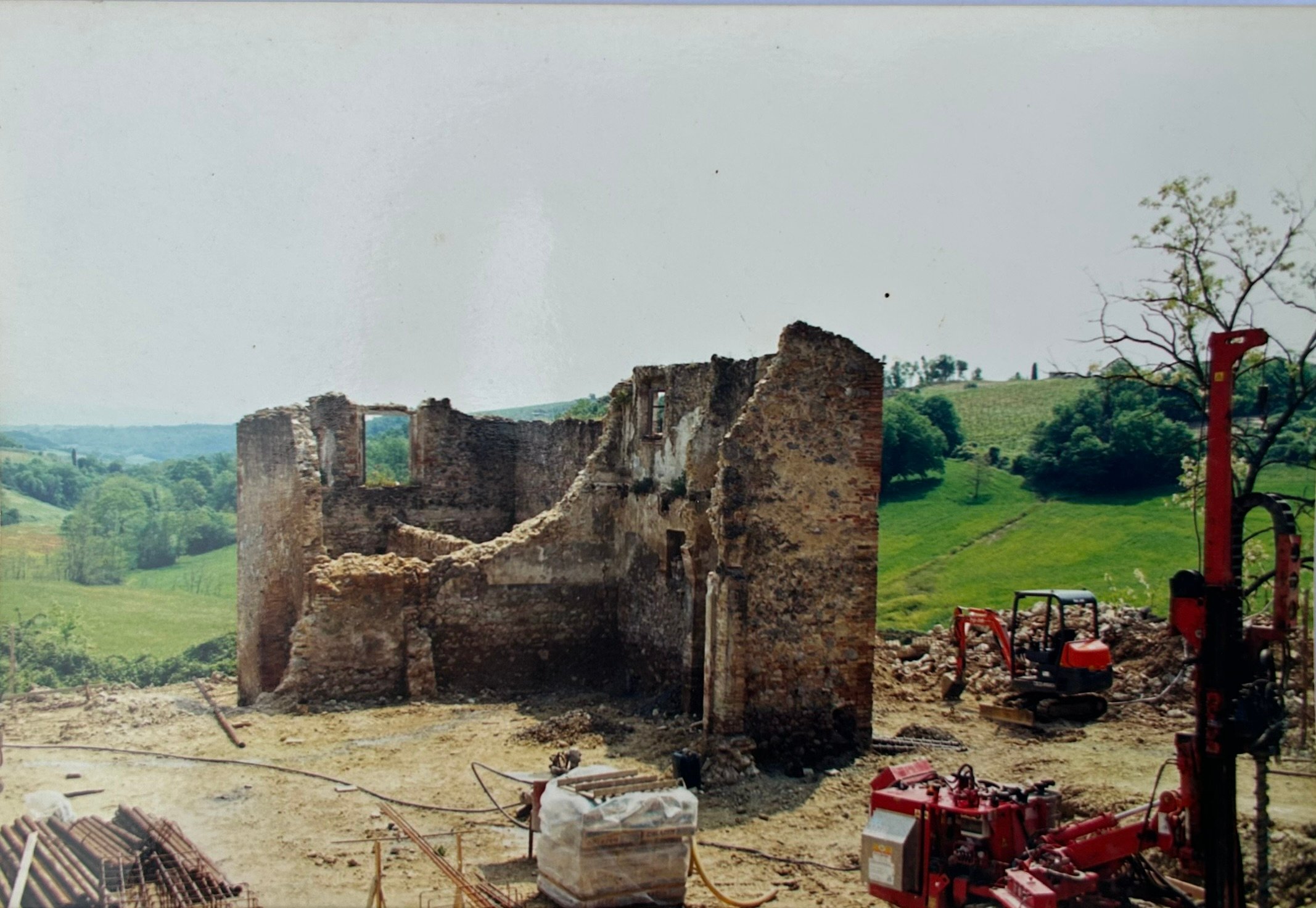
When Giampiero and Lucia first walked the property, what they found spoke of years of abandonment and neglect. The stone walls had collapsed. The wooden beams had rotted away. Even the roof tiles had been salvaged—repurposed by the previous owner, Giuseppe Taddei (known locally as "Beppe"), to build his new house nearby.
What remained was little more than a pile of rubble beneath the Tuscan sky.
Yet despite the desperate state of the building, Giampiero and Lucia saw something others might have missed. They glimpsed a hidden potential in those fallen stones—a soul waiting to be awakened. Where others saw demolition, they saw restoration. Where others saw the end of a story, they saw the beginning of a new chapter.
They decided to make it their project.
The name "Podere" in Italian refers to a small agricultural estate or farm, typically including a farmhouse and surrounding land. "Casanuova" suggests a "new house"—perhaps indicating the structure was once rebuilt or renewed in its own earlier history.
The Restoration: 2000–2002
The task ahead was titanic. This was not merely restoration—it was reconstruction, and it had to be carried out in compliance with Italy's stringent heritage regulations.
But Giampiero and Lucia's vision was clear from the start: they would not transform this house into something modern and characterless. Instead, they would bring it back to life while keeping its soul intact, using ancient and recycled materials so that the history of the house would continue to live in its stones.
Every Material Tells a Story
From 2000 to 2002, they dedicated themselves to the project with passion and unwavering dedication. Every material was carefully selected:
Wooden Beams
Old beams were sourced from local demolition sites, each one carefully selected for character and structural integrity.
Ancient Stones
Original stones were recovered from around the property—buried by time but waiting to be rediscovered.
Terracotta Tiles
Handmade terracotta floor tiles and roof tiles were purchased from old Tuscan houses, preserving centuries of craftsmanship.
Traditional Bricks
Old bricks were selected for the arches above windows and doors, and for the columns supporting the roof.
The result was remarkable: a farmhouse that looked as if time had never passed, respecting traditional construction techniques while meeting modern standards of comfort.
Architectural Choices
The reconstruction preserved the original structure wherever possible:
- The Large Portico: Typical of Tuscan farmhouses, it was restored using ancient stone pillars—a gathering place that still invites guests to linger in the shade.
- Four Residential Units: The interior was thoughtfully divided following the rustic Tuscan style of the period, creating four distinct apartments that each carry their own character.
- Recycled Brick Floors: The flooring was laid with old, recycled bricks, their worn surfaces testament to the footsteps of generations past.
- Cypress Wood Windows: Simple, authentic window designs were reproduced according to nineteenth-century models, using cypress wood typical of buildings from that era.
- Chestnut Wood Doors: Internal doors were crafted from chestnut, continuing the tradition of local materials.
- The Gilvus Fireplace: Perhaps the most touching detail—the fireplace in the Gilvus apartment was rebuilt using an old beam, the only original one recovered from the ruins.
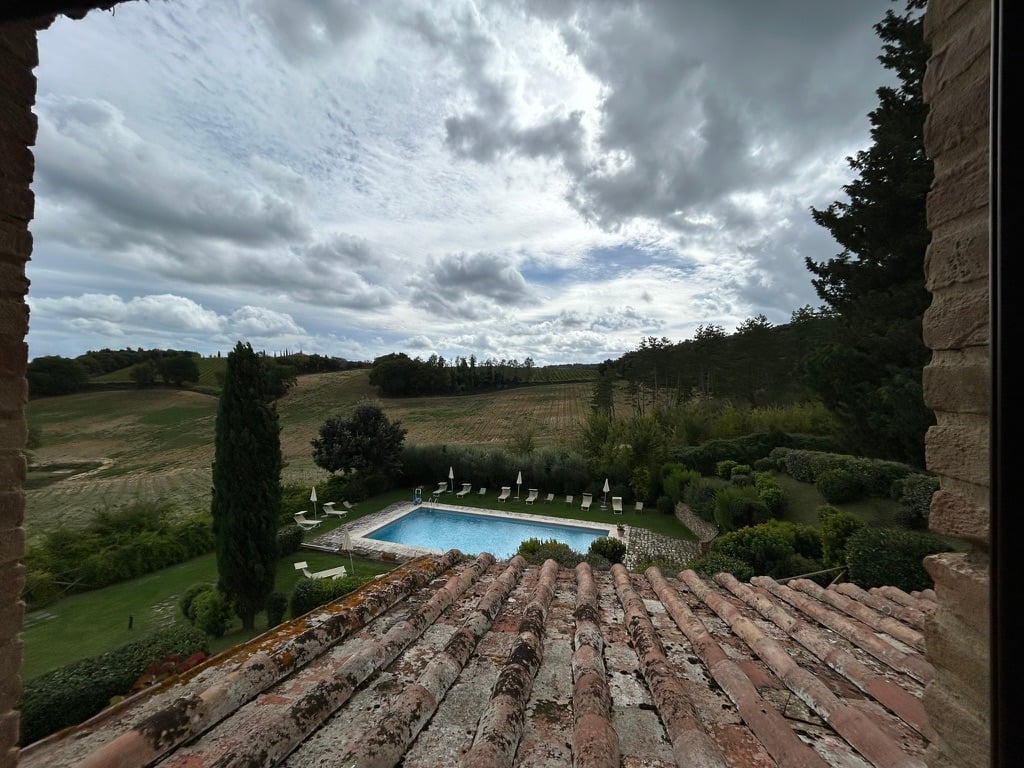
A Note on the Pool: The stones surrounding the house, the shed, and the stairs leading to the swimming pool all come from the demolition of an old road. Today, owning a private pool in this region is something of a blessing—since 2018, no new authorisations have been granted due to water restrictions and environmental regulations.
What Was Lost
Not everything could be saved. Sadly, the Capanna—a rustic hut that once stood near the main structure—could not be recovered. Although it was present in the land registry until 1938, it had since been classified as a "ruin" by local authorities.
Despite extensive searches, no trace of it could be found, and permission to rebuild was not granted. It remains a small loss in an otherwise triumphant story of preservation.
A Dream Realised
In 2002, the project was finally completed.
The old farmhouse, once just a pile of rubble, stood again in all its beauty—as if time had stopped and then gently resumed. Thanks to the use of recycled materials, Giampiero and Lucia had not only rebuilt a house; they had given it back its history and authenticity.
Today, more than two decades later, that once-forgotten ruin remains cosy and welcoming. Its stones, carpentry, and terracotta tiles tell stories of a distant past. Every corner exudes the timeless charm of Tuscan country life.
A New Chapter Begins
The previous owners looked with pride at the fruit of their labour. They had not only realised their dream but had given new life to a piece of history, preserving its legacy for future generations.
In time, Podere Casanuova passed to new stewards: Roberto and Susan, who continue to keep it a special place where tradition and hospitality find a home.
Their commitment remains the same: to honour the history embedded in every stone while sharing the beauty of this corner of Tuscany with travellers from around the world.
Experience It Yourself
Four unique apartments await, each named and designed with its own Tuscan character.
Contact Us
Questions about the property or its history? We'd love to hear from you.
This article is based on records provided by Giampiero and Lucia, the visionaries who brought Podere Casanuova back to life. Their dedication to preserving Tuscan heritage continues to inspire all who stay here.